
Sewer lateral under Steiner Ranch landscaping
Sloped lots and protected trees limit pit placement. Steerable bore from cleanout to tap replaces failed PVC with HDPE while minimizing canopy impact.
Austin, TX · Travis County
Sewer and water line boring under Steiner Ranch slopes, Circle C lawns, and Austin Water lateral replacements — HDPE pulls without trenching protected landscapes.
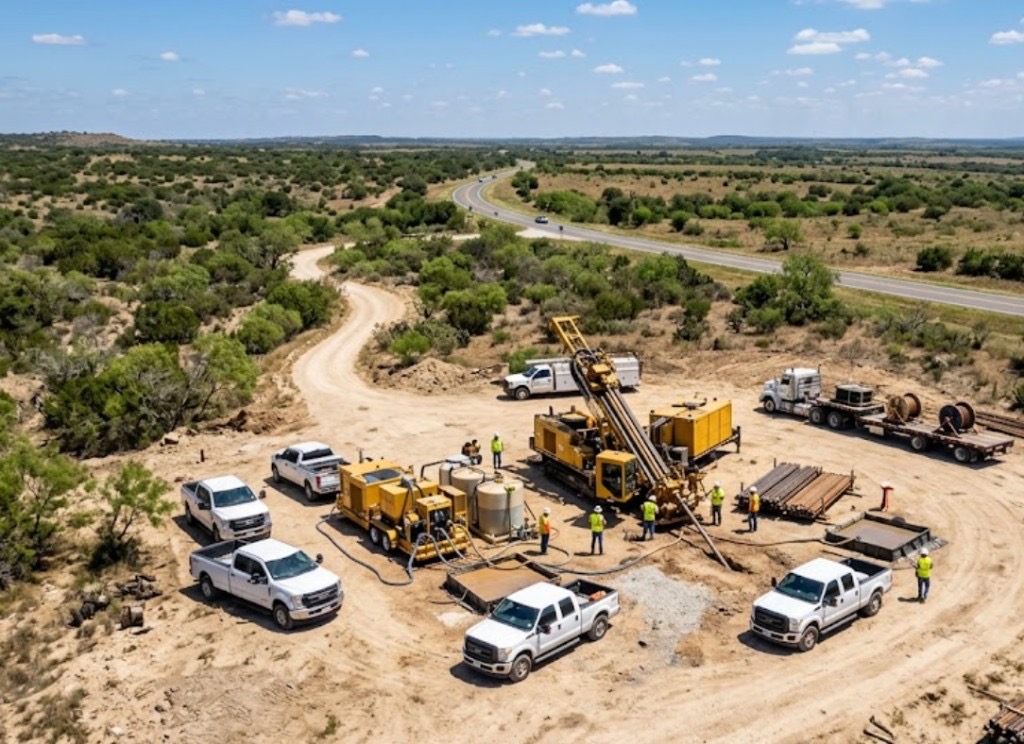
Sewer and water line boring in Austin is what Circle C and Steiner Ranch homeowners search when PVC laterals fail under pool decks, decks, or aggressive slopes. Open-cut through St. Augustine and protected oaks often costs more in restoration than the pipe — HDD from a compact cleanout preserves landscaping city tree ordinances protect.
Austin Water lead service replacements and main-to-lateral ties along creek corridors use the same trenchless pull where floodplain limits surface work. Directional Boring Texas coordinates city tap timing, HDPE sizing, and 811 locates across Austin Energy, gas, and irrigation before pits open.
Real Travis County angles — not generic statewide copy.
Sloped lots and protected trees limit pit placement. Steerable bore from cleanout to tap replaces failed PVC with HDPE while minimizing canopy impact.
Slab-on-grade neighborhoods hit first water service failures under drives. Entry at meter preserves concrete — homeowners avoid weeks of sod restoration.
Municipal crews replacing mains near creeks face floodplain and wet-season limits. Trenchless sections reduce riparian disturbance while tying into manholes.
Narrow alleys too tight for trench rigs. Compact rigs replace laterals under brick with minimal merchant closure on South Congress adjacency.
Cleanout or meter pit is entry; Austin Water tap or house connection is exit. Pilot steers under hardscape; ream matches HDPE OD; pullback monitored on slopes. Arborist input may affect pit placement — flagged early.
Edwards Limestone, Austin Chalk, and iron-rich clay create variable drilling response — especially west and southwest of downtown.
Travis County profiles transition from east-side clay to west-side limestone and chalk. Iron-rich clay can ball up on reamers without proper mud chemistry. Limestone intervals may require harder tooling and slower production. Near the Edwards aquifer recharge zone, fluid loss and bore stability get extra attention — not because HDD is banned, but because documentation and depth control matter to reviewers. Hill Country slopes change pullback loads and require rig positioning planning on tight residential lots.
Flash flooding in Hill Country drainages, drought-hardened soils, and summer heat shape when pits can be opened safely in Austin.
Spring storms can dump inches in hours — creek-adjacent jobs pause when pits flood. Summer drought hardens clay and can increase torque. Winter freezes are infrequent but spike pipe break calls; locates still precede emergency bores.
City of Austin Development Services, Austin Water, Travis County, CAPMetro adjacency, and TxDOT Austin District.
City of Austin permits ROW occupancy, drive cuts, and bore notifications. Austin Water reviews sewer tie-ins. Travis County governs unincorporated areas. TxDOT Austin District handles I-35, MoPac, US-183, and SH-130 crossings. CAPMetro coordination applies near rail. Tree ordinances on protected oaks may affect pit placement even when the bore itself is trenchless — we plan pits to reduce arborist conflicts.
Open-cut destroys St. Augustine, irrigation, and oak root zones homeowners invested in. Boring wins on residential lateral replacement under developed Travis lots.
Length, depth, pipe material, surface restoration, city tap fees, rock, and access for rig setup.
We review plans, bore path, access, existing utilities, and owner goals — residential repair or engineered crossing.
Texas dig law compliance: ticket, wait period, verify marks, pothole at conflicts before steel or bit enters ground.
Alignment, profile, soil expectations, permit needs, and crossing agreements for roads, rails, or waterways.
Right rig for length and diameter — mini-HDD for tight urban shots, larger spreads for long pulls and reams.
Steerable pilot, survey checks, reaming passes as required for product pipe or casing diameter.
HDPE fusion, steel casing, conduit bundles, or carrier pipe installed per spec with pullback monitoring.
Alignment records, mandrel or pressure tests where spec requires, as-built for owners and inspectors.
Minimal surface disturbance philosophy — compact entry/exit pits, restore hardscape and landscape per scope.
Often yes — bore under hardscape from offset pits. Some tie-ins need small access cuts.
Many shots complete in one to two days after locates. Rock, Austin Water coordination, or slope access extend the window.
Yes — common for residential replacement per Austin Water requirements.
We minimize pits and offset entry to reduce root impact. Tree ordinances may require arborist input.
Length, rock, slope, hardscape, tap fees, and restoration drive price — call with address.
24/7 — Emergency dispatch statewide. Tell us your bore path, pipe size, and city — a specialist calls or texts back with a straight answer.
Free bore estimate
Step 1 of 2 — project details first