
Backhaul along I-37 TxDOT relocation ROW
TxDOT Corpus District relocations in loose coastal soils. Potholing confirms depth at gas and electric crossings before duct pull — sand collapse managed with ream discipline.
Corpus Christi, TX · Nueces County
Fiber and telecom conduit along Corpus Christi I-37, SPID, and Ayers corridor — multi-duct HDPE with AEP Coastal remark tickets through sand and shallow coastal stacks.
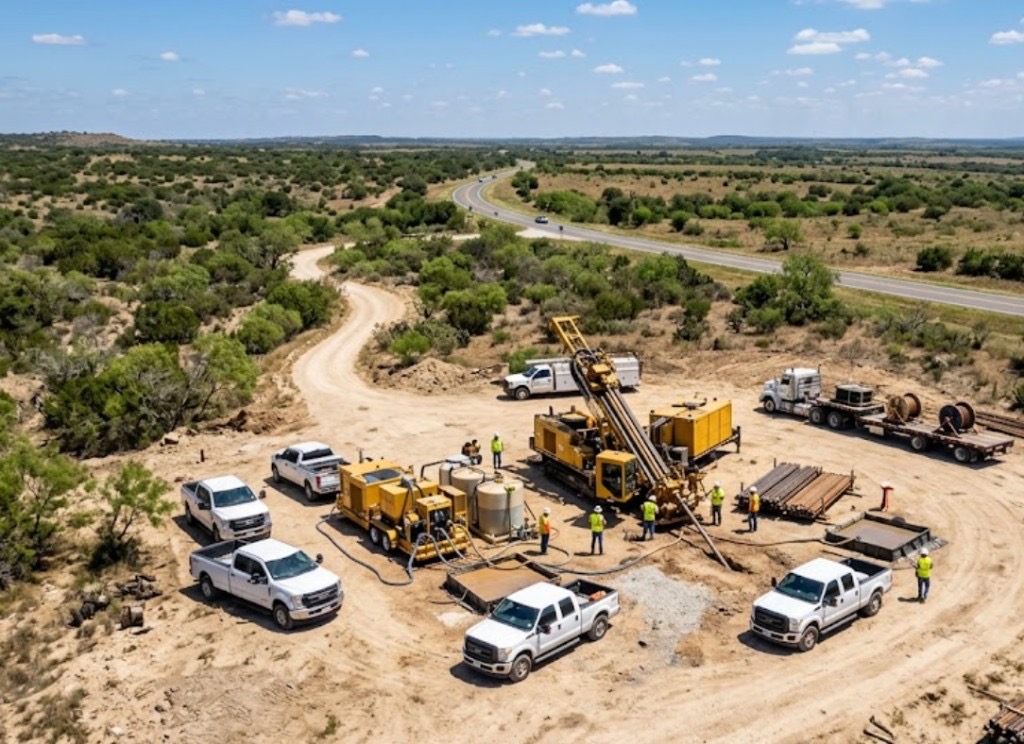
Fiber optic boring in Corpus Christi supports port backhaul, medical corridor networks, and enterprise conduit along I-37, SPID, and southside growth bands. Coastal arterials stack shallow AEP secondary, gas, irrigation ditches, and private fiber — remark tickets and hand holes at conflicts are standard.
Directional Boring Texas places HDPE duct bundles under sidewalks, medians, and industrial easements with HDD sized for conduit count. Vault ties planned where 811 paint cannot show irrigation ditches and drainage parallels.
Real Nueces County angles — not generic statewide copy.
TxDOT Corpus District relocations in loose coastal soils. Potholing confirms depth at gas and electric crossings before duct pull — sand collapse managed with ream discipline.
SPID commercial blocks need short vault-to-pole shots without shutting feeder lanes. Compact pits protect asphalt in coastal wind.
Multi-building medical campuses want redundant rings under drives and landscape islands. HDD links hand holes with minimal surface disruption.
Highway widening relocations place telecom with water and electric moves. Sequencing with prime contractors avoids hurricane-route conflicts.
Conduit count and bend radius define profile. Entry pits preserve curb returns on sand-heavy ROW. Pullback bundles HDPE — shell hash increases reamer wear on beach-adjacent pulls.
Coastal sands, shell hash, and soft clays with high groundwater near bays and canals — different steering and fluid plans than inland Texas.
Nueces County coastal profiles feature loose sands, shell layers, and soft clay with high water tables near bays. Sands require careful fluid program to prevent collapse; ream stages may be shorter and more frequent. Shell hash accelerates wear. Inland Calallen and Annaville see firmer clay — still coastal-influenced groundwater. We do not use inland clay assumptions for beach-side bores.
Gulf humidity, coastal wind, hurricane evacuation routes, and salt exposure affect restoration materials and work windows in Corpus Christi.
Hurricane season elevates schedule risk June through November — owners want utilities in before peak season. Coastal wind affects lane closure setups on high bridges. Sudden tropical downpours flood low entries near canals. Salt air favors corrosion-resistant hardware on exposed pit structures.
City of Corpus Christi Engineering, Nueces County, TxDOT Corpus District, port authority adjacency, and hurricane route priorities on I-37.
City of Corpus Christi Engineering permits ROW work. Nueces County handles unincorporated areas. TxDOT Corpus District governs I-37, US-181, and SPID crossings. Port of Corpus Christi properties require owner coordination. Hurricane evacuation route work may face seasonal restrictions during peak storm preparedness windows.
Trenching across SPID entries and medical parking triggers expensive restoration and lane fights. Fiber boring keeps access open.
Duct count, bore length, soil, hardscape restoration at vaults, traffic control, and permit fees in city ROW.
We review plans, bore path, access, existing utilities, and owner goals — residential repair or engineered crossing.
Texas dig law compliance: ticket, wait period, verify marks, pothole at conflicts before steel or bit enters ground.
Alignment, profile, soil expectations, permit needs, and crossing agreements for roads, rails, or waterways.
Right rig for length and diameter — mini-HDD for tight urban shots, larger spreads for long pulls and reams.
Steerable pilot, survey checks, reaming passes as required for product pipe or casing diameter.
HDPE fusion, steel casing, conduit bundles, or carrier pipe installed per spec with pullback monitoring.
Alignment records, mandrel or pressure tests where spec requires, as-built for owners and inspectors.
Minimal surface disturbance philosophy — compact entry/exit pits, restore hardscape and landscape per scope.
Depends on OD, bend radius, and ream diameter — medical and SPID multi-duct backhaul is common.
Yes — electric conflicts standard on arterials. Locates, remarks, and potholing in scope.
Yes — pits offset to preserve hardscape except at vault ties.
Sand collapse, coastal wind on MOT, hurricane season, and irrigation ditches not on 811.
Duct count, length, sand, bay wind MOT, night work, and coastal restoration drive price.
24/7 — Emergency dispatch statewide. Tell us your bore path, pipe size, and city — a specialist calls or texts back with a straight answer.
Free bore estimate
Step 1 of 2 — project details first